The Corner Store Critique: Redefining What It Means to Be the Party of Business
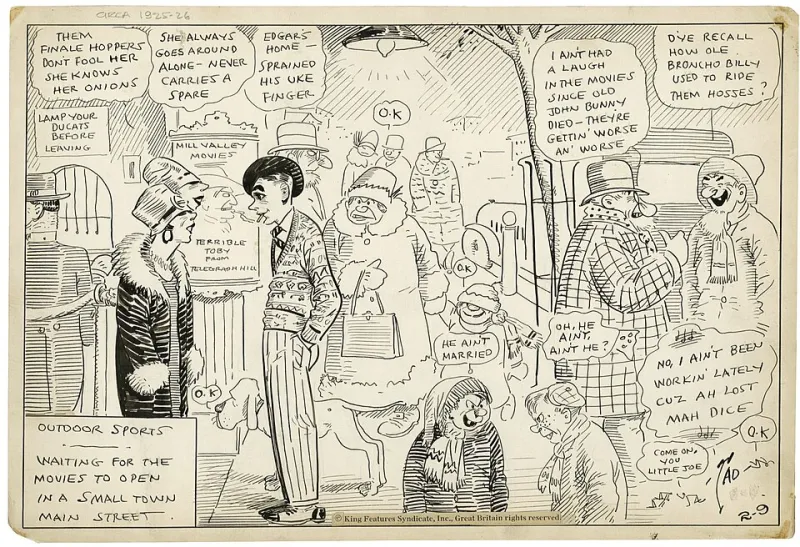
Photo: Tad Dorgan, Public domain, via Wikimedia Commons
There is a story that plays out on thousands of Main Streets across this country, and it rarely makes the financial news. A family opens a hardware store, a diner, a landscaping outfit, or a bookstore. They work seventy-hour weeks. They sponsor the Little League team. Then a big-box retailer gets a tax abatement from the county commission, a regulatory structure written by and for companies with lobbying budgets, and a supply chain advantage no local shop could ever negotiate. Within five years, the family business is a memory and the Little League team has a new sponsor: a corporation headquartered eleven hundred miles away.
For a long time, the Republican Party treated this story as an unfortunate but acceptable cost of doing business. The party of business, after all, was supposed to side with business — full stop. That assumption is now under serious review, and not a moment too soon.
The Old Consensus and Its Cracks
The postwar GOP consensus was elegantly simple: lower taxes, lighter regulation, and unwavering defense of the corporation. Whatever was good for General Motors was good for America, and whatever was good for the Fortune 500 was, by extension, good for conservatism. This formula won elections for forty years.
But the formula contained a buried assumption: that the interests of large corporations and the interests of free enterprise were the same thing. They are not. Free enterprise is a system — open markets, fair rules, the presumption that the best product and the best service win. Large corporations, when sufficiently large, stop competing in that system and start rigging it. They lobby for regulations their smaller rivals cannot afford to comply with. They seek carve-outs from the tax code written into existence by their own counsel. They move capital overseas and call it efficiency.
Conservative voters have noticed. And increasingly, they have drawn the connection between the corporate boardrooms that petition the GOP for tax relief and the same institutions that fund ideological projects hostile to the families who vote Republican. When a megacorporation demands tax cuts with one hand while underwriting cultural campaigns against its own customers' values with the other, the voters' patience wears thin. The surprise is not that the Republican coalition is rethinking 'pro-business.' The surprise is that it took this long.
What a Pro-Main Street Agenda Actually Looks Like
If the old consensus is dead, what replaces it? Not socialism, whatever the Left hopes. A genuinely pro-Main Street agenda would be recognizably conservative — it would simply aim its principles at the right targets.
Start with tax parity. The carried-interest loopholes, the accelerated depreciation schedules, the international profit-shifting games — these are not free enterprise; they are preferences purchased by size. A flatter, simpler tax code with fewer carve-outs would hurt the lobbying industry and help the family business that cannot afford a tax department.
Next, regulatory proportionality. A rule that costs a multinational 0.02 percent of revenue can cost a five-employee shop 5 percent — or the business entirely. Conservative reform should require regulators to weigh compliance burden by firm size, not just aggregate cost. Antitrust enforcement, long treated as a progressive hobby, deserves a second look from the right as well, not to punish success but to prevent the platform monopolies from buying, merging, or bullying away every potential competitor before it becomes one.
Third, procurement and lending. Federal and state contracts disproportionately flow to large incumbents. Small-business set-asides exist but are chronically underenforced. Community banks — the institutions that actually know the local entrepreneur's name — were squeezed by rules written around the too-big-to-fail giants. Fixing that is not populism against capitalism. It is capitalism against cronyism.
The Primaries Are Already Voting
The intellectual shift is well ahead of the legislative one, but the primaries are moving. Candidates in Republican contests from Ohio to Arizona now campaign on opposing corporate bailouts, questioning Big Tech's Section 08 protections, and championing local enterprise — themes that would have been heresy at a chamber-of-commerce lunch in 2005. Voters are not turning against markets. They are turning against the pretense that Wall Street's quarterly earnings call and Main Street's payroll are the same constituency.
This distinction matters enormously for the future of the party. A conservatism that defends enterprise as such — the bakery, the contractor, the independent pharmacist — has a moral clarity and a broad appeal that a conservatism defending the S&P 500 has never quite managed. It also happens to be more honest. The family that owns the hardware store on the square is not asking for a handout. It is asking for rules that do not tilt the field toward whoever can afford the most lobbyists.
The party that figures out it can be the party of business without being the party of big business will not just win arguments. It will win elections — and it will deserve to.