Federalism Strikes Back: Inside the Statehouse Strategy to Reclaim the Constitutional Balance

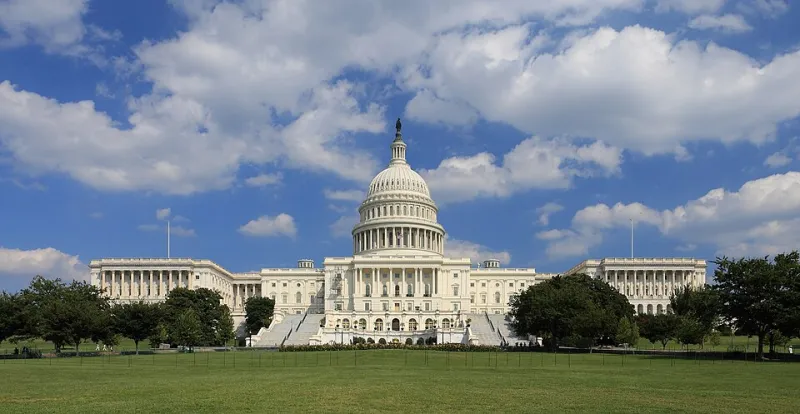
Photo: Chrismiceli, CC0, via Wikimedia Commons
Walk into a legislative session in Austin, Tallahassee, or Cheyenne these days and you will hear a phrase that would have sounded antiquated a decade ago: state sovereignty. It is not merely rhetoric from a handful of backbenchers, either. Across the country, Republican-controlled legislatures are passing — and governors are signing — a generation of bills designed to push back against federal overreach with a legal sophistication that the old nullification movements of the nineteenth century never possessed.
Call it a federalism revival, if you like. Its architects prefer to call it a restoration.
The New Toolkit of the States
What distinguishes this wave of legislation from earlier, blunter efforts is its creativity. Rather than simply declaring a federal law void — a move the courts have never looked kindly upon since Cooper v. Aaron — today's state lawmakers are assembling a toolkit of constitutionally sturdier instruments.
Interstate compacts sit at the top of the list. Article I, Section 10 of the Constitution explicitly permits states to enter agreements with one another, and conservative legal minds have taken notice. Compacts on energy grid coordination, border enforcement cooperation, and even the interstate recognition of occupational licenses allow states to coordinate policy without asking Washington's permission. When a dozen governors sign onto a shared framework, the federal government suddenly finds itself negotiating with a bloc rather than picking off isolated states one by one.
Below the compact level sit what analysts have labeled 'anti-commandeering' statutes. Rooted in the Supreme Court's 1997 Printz decision, which held that the federal government cannot conscript state officers to enforce federal programs, these laws direct state agencies and local police to decline participation in federal regulatory schemes they never consented to. Firearms sanctuaries — counties and states declaring that no resources will be spent enforcing federal gun restrictions that exceed the Second Amendment — are the most visible example, but the same logic is being applied to data privacy, education mandates, and land use.
The People Behind the Pushback
This is not a movement without authors. In state capitols from Nashville to Phoenix, a cohort of legislators — many of them former county commissioners, constitutional attorneys, or small-town business owners — has spent years studying the fine print of federalism. Think tanks affiliated with the state sovereignty movement have published model bills, hosted briefings, and supplied the legal footnotes that turn a protest resolution into an enforceable statute.
What unites them is a conviction that the Founders meant what they wrote. The Tenth Amendment was never decorative. James Madison, in the Virginia Resolutions of 1798, argued that the states were 'duty bound' to interpose themselves when the general government exceeded its delegated powers. Modern legislators may not use the word 'interposition' in committee hearings, but the spirit is unmistakably present in bills requiring legislative review of federal mandates or directing the state attorney general to litigate against unconstitutional overreach.
Will It Outlast One Election Cycle?
Herein lies the honest question conservatives must ask themselves. Federalism revivals have a way of evaporating when the party holding the White House changes. The same senators who decried executive overreach under one president often discover a newfound tolerance for it under another. State-level movements are not immune to this hypocrisy by proxy.
There are reasons for optimism, however. First, the legal architecture being built — compacts, anti-commandeering statutes, sovereignty commissions — is durable in a way that symbolic resolutions never were. Once a state has established a standing committee to review federal mandates, that machinery does not disassemble itself after an election. Second, the issues animating the movement are not transient. Federal debt, regulatory burden, and cultural disputes over education and the Second Amendment are not going away, and neither is the asymmetry between a Washington that governs 330 million people and statehouses that govern communities they actually know.
Third, and perhaps most importantly, the American public's trust in federal institutions has collapsed to historic lows while trust in state and local government remains comparatively resilient. Federalism, in other words, is no longer a lawyer's abstraction. It is a lived preference.
The Conservative Case, Stated Plainly
Skeptics will note, correctly, that some of this legislation will be struck down, and that a few bills are more press release than statute. Fair enough. But the measure of a constitutional movement is not whether every bill survives. It is whether the underlying principle re-enters the bloodstream of American politics.
For most of the past century, conservatives fought federal overreach primarily through the courts and the ballot box in Washington — fighting the enemy on the enemy's chosen terrain. What is happening in the statehouses now is different. It is a recognition that the Constitution's original design gave the states the tools to defend themselves, and that those tools were never actually removed. They were merely forgotten.
The Tenth Amendment is having a renaissance not because a president demanded it or a court decreed it, but because ordinary state legislators — the most local, most accountable elected officials in the republic — decided to read the founding document as written and act accordingly. That is how a constitutional revival is supposed to work: from the bottom up, one session bill at a time.
Whether the movement matures into a lasting reordering of American governance or fades with the next news cycle will depend on whether conservatives in office treat federalism as a governing philosophy rather than a seasonal talking point. The states, at least, seem ready to do their part.