Moms, Dads, and the Quiet Revolution in the School Board Conference Room
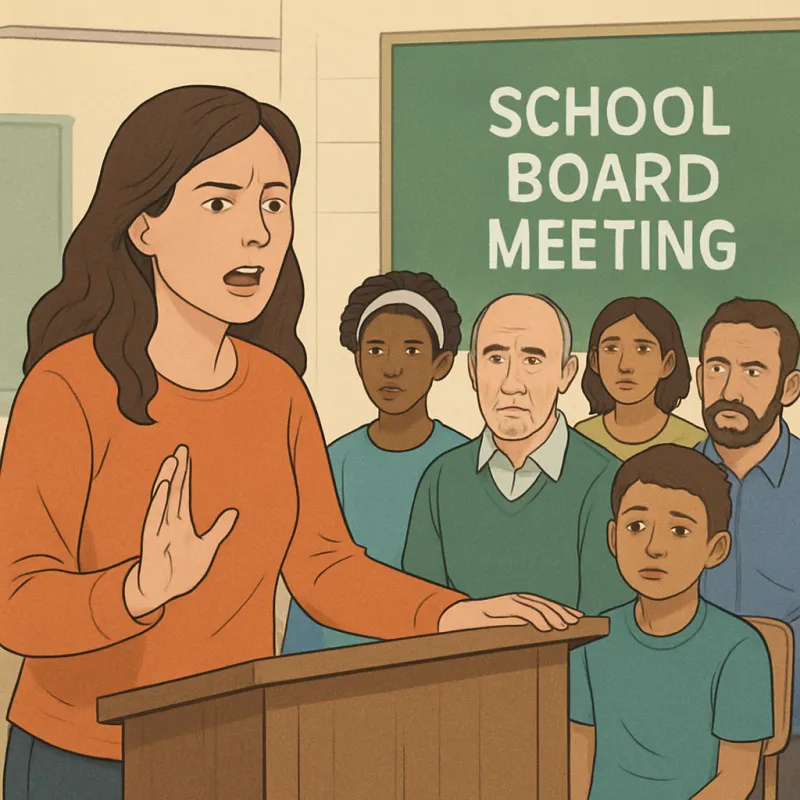
Photo: parents speaking at school board meeting public comment, via download-pa-s3.thethinkacademy.com
For most of the last half-century, school board elections were the dullest corner of American civic life. Candidates campaigned on bus routes and boiler repairs; turnout hovered in the single digits; the same slate of incumbents rotated through office for decades. That era is over. From Loudoun County, Virginia, to Frisco, Texas, to the suburbs of Omaha, the local school board has become the most fiercely contested political battleground in the country — and the conservative movement's most promising proving ground.
How the Auditorium Became the Arena
The transformation began in earnest in 2020, when pandemic-era closures forced parents into the role of eyewitness. For the first time, millions of American families watched, in real time, what was being taught, how it was being taught, and how their children were responding. Remote learning pulled back the curtain, and what parents saw did not always match what the brochure promised.
What followed was not an astroturf campaign orchestrated from Washington, whatever national media outlets suggested. It was mothers and fathers — nurses, electricians, small business owners — showing up to two-hour board meetings to ask questions about curriculum materials, library holdings, and policies governing student privacy. When they were dismissed, patronized, or in some notorious cases investigated by federal authorities for speaking out, they did what Americans historically do: they organized and they voted.
The Record So Far
The results have been uneven but instructive. Parent-led slates have unseated long-tenured incumbents in districts across Virginia, Florida, and the Midwest, often defeating opponents who outspent them several times over. In some blue-leaning suburbs, candidates focused on academic transparency and parental notification won races that Republicans had not contested seriously in years. Losses have come too — in districts where organization was thin or where national controversies drowned out kitchen-table concerns — and those defeats carry their own lesson: parental rights wins as a local, practical argument, not as an abstract national slogan.
The strategic significance for the broader conservative coalition is hard to overstate. School board races have drawn back into politics exactly the voters the movement needs: younger families, working mothers, immigrants who came to America for its schools and are startled to find ideologies they fled. These voters are not movement veterans. They are converts, and converts make the most reliable foot soldiers.
A Playbook for the Next Cycle
For conservatives wondering where to begin, the path is well marked by those who have walked it.
Show up before you run. The most effective parent movements spent a year attending meetings, filing public records requests, and building coalitions across demographic lines before fielding a single candidate. Credibility is earned in the conference room, not announced on the ballot.
Master the mechanics. Board elections are governed by arcane local rules — filing deadlines, petition requirements, odd-year calendars. The side that masters these details wins; the side that treats them as trivia loses. Filing deadlines in many districts fall within months, not weeks, of Election Day.
Run on records, not rhetoric. The candidates who win ask for curriculum documents, review library procurement policies, and cite specific expenditures. Voters trust receipts. A parent who can quote the district's own policy manual is worth ten who can only quote a national talking point.
Build beyond the base. The winning coalitions include grandparents, recent immigrants, and Democrats who simply want their children taught mathematics and reading without ideological interludes. The movement that welcomes them grows; the one that demands a loyalty oath shrinks.
Stay for the budget. Curriculum is the entry point, but governance is the job. Board members vote on contracts, personnel, and capital projects. The conservative school board member who shows up to every budget workshop earns the standing to lead on everything else.
Why This Fight Matters Most
There is a reason the left treats these small-town elections as matters of national urgency, pouring resources into races for positions that control bus schedules. Whoever shapes the classroom shapes the citizen. Conservatives once ceded this terrain by default, assuming the culture was won elsewhere. The past several years have demonstrated the opposite: it is won — or lost — one seven-member board at a time, in rooms with folding chairs and a three-minute public comment limit.
The quiet revolution is not on television. It is in the school auditorium on a Tuesday night, where a parent with a folder of printed policies asks a question the incumbent cannot answer. That is where the renewal begins. It should be where every conservative reader begins, too.