Coffee Refills and Cracked Credit Cards: The Diner Economy Washington Refuses to See
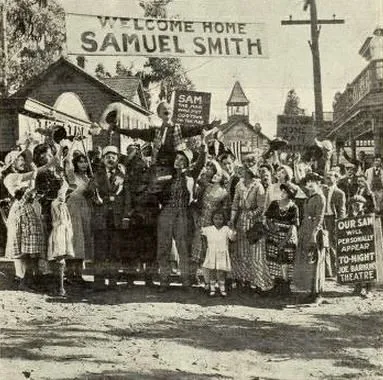
Photo: Mack Sennett Comedies / Associated First National, Public domain, via Wikimedia Commons
The Spreadsheet Says You're Doing Fine
According to the latest federal releases, the American economy is in remarkable health. Inflation has moderated. Unemployment sits near historic lows. The gross domestic product hums along like a well-tuned pickup. In Washington, these figures are recited with the reverence of scripture, and any who question them are dismissed as doom-sayers peddling vibes instead of data.
But drive twenty minutes outside the Beltway—past the fourth toll booth of a highway that never seems to get fixed—and the numbers on the page start to look like a foreign language. The people who actually keep this country running have stopped trusting the official story, and they have good reason.
What the Waitress Knows
Consider the American diner, that most reliable of civic institutions. The waitress working the breakfast shift is, in her own way, a more sophisticated economic analyst than a Congressional Budget Office modeler. She knows within a week when her regulars have stopped ordering the full plate and started splitting one. She watches the tips shrink from twenty percent to fifteen to whatever change was rattling around in the truck console. She notices that the construction crew that used to come in at six sharp now comes in at eight, because the hours got cut.
None of this appears in the Consumer Price Index. Tips are notoriously underreported, and reduced hours don't show up in an unemployment rate that only counts people actively looking for work. But the waitress knows. The bartender knows. The guy behind the counter at the hardware store in Dayton or Wichita or Scranton knows.
The Tell-Tales of a Strained Middle Class
The pattern repeats across the small businesses that anchor ordinary towns. Credit card balances are climbing to record highs, not because families are irresponsible, but because the grocery bill that cost $180 in 2019 now runs $260. Buy now, pay later plans have quietly become the layaway of the squeezed middle class. Meanwhile, the shift from full-time to part-time work lets corporate press releases celebrate job growth while actual paychecks get thinner.
In the church parking lot after Sunday service, the conversation is not about the unemployment rate. It is about the second job someone took to cover the car insurance, the grown children who moved back home, the retirement that keeps receding like a mirage. These are not anecdotes to be waved away. Aggregated across thousands of towns, they are a dataset more honest than anything produced by a federal statistical agency whose models were built for an economy that no longer exists.
Turning the Gap into a Weapon
Conservative populists should stop apologizing for anecdote and start organizing it. The left has spent decades mastering the art of the personal story—the witness panel, the sob narrative deployed before a friendly committee. Meanwhile, we have been content to lose the argument while holding the better data.
The framework is simple. Ahead of the next election cycle, local parties and citizen journalists should systematically document what might be called the diner index: tip averages at five local establishments, the ratio of help-wanted full-time postings to part-time ones, credit applications at the local appliance dealer, the number of houses on a given street with four or five cars in the driveway because adult children cannot afford to launch. County chairs could publish a monthly one-pager. Congressional challengers could build entire campaigns around it, contrasting the dashboard in Washington with the ledger in the waitress's apron pocket.
This is not about manufacturing pessimism. It is about honesty in measurement, and about denying the governing class the luxury of statistics that flatter them. When a senator claims the economy is thriving, the response should be specific: name the diner, name the town, name the number.
Trust the People Over the Paperwork
There is a deeper principle at stake. For half a century, conservatism has argued that dispersed local knowledge—Hayek's insight, though few politicians remember it—outperforms central calculation. The same holds for economic measurement. A million waitresses, clerks, and deacons processing reality in real time will out-read a model written by a twenty-six-year-old staffer who has never waited a table or met a payroll.
The next election will not be decided by the GDP print. It will be decided by whether Americans believe their own eyes, and whether one party finally has the wit to stand with them. The coffee is cheap. The information is free. The refills, unlike everything else, are still on the house.