The Ballot in the Break Room: How Statehouse Fights Over Secret Voting Will Shape the American Workplace
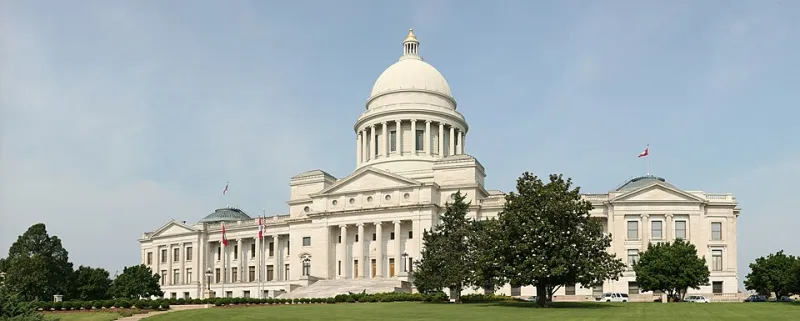
Photo: Daniel Schwen, CC BY-SA 4.0, via Wikimedia Commons
Every election cycle brings the same ritual. Pundits fixate on the top of the ticket, dissecting debate performances and swing-state polling with the intensity of meteorologists tracking a hurricane. Meanwhile, in statehouses from the plains to the coast, decisions are being made that will touch more American workers more directly than anything the next president does in four years.
The subject is workplace voting — specifically, whether workers deciding whether to join or fund a union do so by private ballot or by signature card collected by an organizer at their doorstep. It sounds like procedural trivia. It is nothing of the sort.
Why the Secret Ballot Matters
The principle at stake is one every American learns in civics class: the sanctity of the private vote. When a citizen casts a ballot for mayor or school board, no one stands over their shoulder. The choice is made in the quiet of the booth, free from pressure and reprisal.
Card-check arrangements upend that principle in the workplace. Under a card-check system, union recognition can follow from signed authorization cards collected over weeks or months — often in settings where an employee may feel watched, pressured, or simply worn down by repeated visits. A signature given on a doorstep is not the same as a vote cast in a booth, and everyone involved knows it.
Conservatives need not oppose unions as a matter of principle to oppose this practice. The argument is not anti-worker; it is anti-coercion. If a majority of employees genuinely want representation, that majority will show up in a secret ballot election. If organizers resist the secret ballot, the obvious question follows: why?
The Statehouse Battleground
With Congress perpetually gridlocked, the action has shifted to the states, and rightly so. Labor law in this country has always been a layered thing, and states retain real authority over workplace matters within their borders.
Several state legislatures have taken up measures to protect the private-ballot standard, requiring secret elections before workers can be bound to collective bargaining arrangements. Others are fighting over so-called payroll protection provisions, which give public employees an annual opportunity to affirmatively renew their dues deductions rather than having them extracted by default. And right-to-work statutes — which ensure no worker can be forced to fund a union as a condition of employment — remain a live issue in states where legislative majorities have shifted.
These fights rarely make the evening news. They are decided in committee rooms in Topeka, in Nashville, in Lansing, by legislators who answer to constituents far more accessible than any senator. That accessibility is precisely why local organizing matters. A county party chairman, a state representative, a grassroots activist with a petition and a Saturday afternoon — these people can move policy in ways that national commentators cannot.
What Is Actually at Stake
Strip away the slogans and three practical outcomes hang in the balance.
First, worker choice. Whether an employee funds a union should rest on that employee's informed, unpressured decision, renewed regularly rather than locked in perpetuity.
Second, employer costs. Card-check recognition and mandatory bargaining structures raise the cost of doing business, and those costs do not vanish. They surface in prices, in payrolls, and in the decisions of manufacturers weighing whether to expand in a state or flee to a friendlier one. Governors understand this calculus even if columnists do not.
Third, the integrity of voting itself. A movement that insists the private ballot is sacred at the polling place but dispensable at the workplace has a consistency problem it cannot talk its way out of.
The Conservative Playbook
So what should the right-minded reader do? Start by paying attention to the statehouse rather than the White House. Track the labor bills in your own legislature. Ask your state representative, in writing, where they stand on secret-ballot protections and dues renewal requirements. Show up at the party county committee meeting — the one with twelve folding chairs and a coffee urn — because that is where candidate recruitment and platform language actually get decided.
Support organizations doing the unglamorous work of educating workers about their rights. Back candidates for state office who treat worker privacy as a principle rather than a talking point.
The presidential race will consume the headlines for the next several years. It should not consume all of our attention. The rules governing the American workplace are being written right now, one committee vote at a time, in state capitols where a handful of engaged citizens can still tip the scale. Conservatives who show up will shape those rules. Conservatives who stay home will live under them anyway.