Pumps, Coffee, and the Last Public Square: How the Corner Gas Station Became America's Unlikely Civic Hub
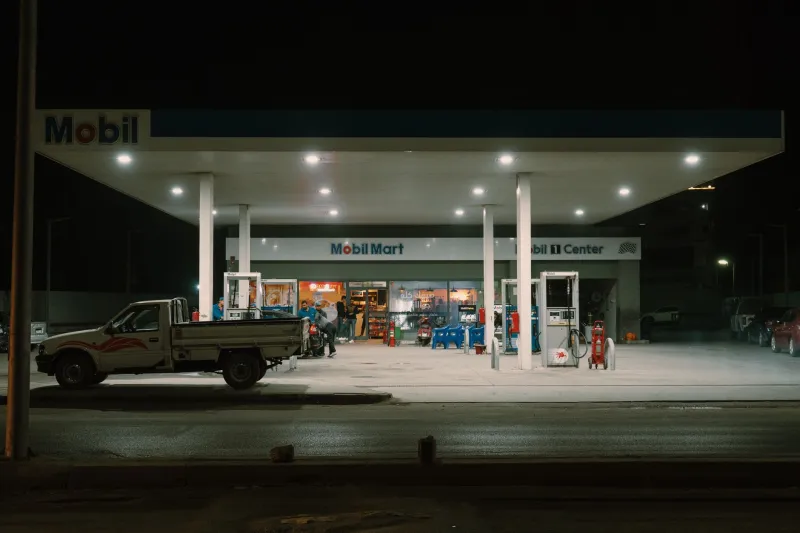
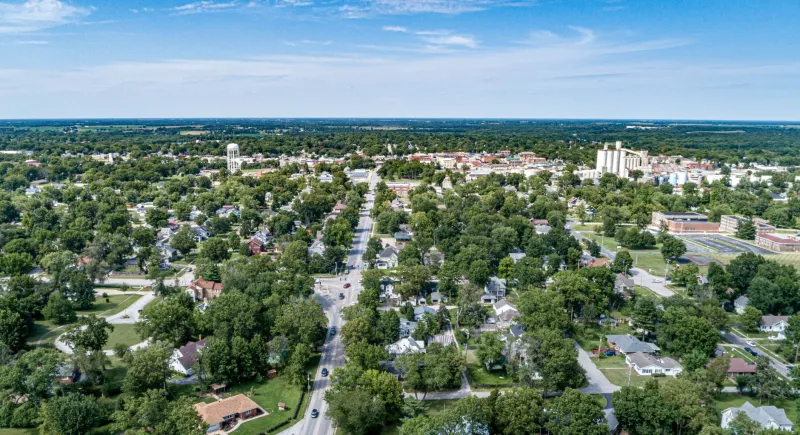
Drive through nearly any small town in Iowa, Kentucky, or eastern Oregon and ask where the community actually gathers. The answer is increasingly not the church basement, not the shuttered shopping mall, not the county courthouse steps. It is the gas station on the corner of Highway 9 and Main Street—the one with the bottomless coffee, the bulletin board of hay-bale listings, and the regulars who claim the same corner table every morning at 6:15.
This is not nostalgia. It is a structural shift in American civic life, and it carries real policy consequences that Washington routinely ignores.
When the Public Square Closes, the Pumps Stay Open
The transformation did not happen overnight. Big-box retailers spent two decades pulling out of rural markets, consolidating to regional distribution corridors and leaving small towns with fewer places to buy groceries, hardware, or a birthday card. The post office has cut hours. The local diner that survived three generations finally closed its doors after the pandemic. Municipal budgets strained under pension obligations have trimmed park maintenance and library hours.
What remained? The convenience store and the fuel island. These establishments proved resilient because they sell what people cannot do without: fuel, caffeine, and proximity. In the process, they inherited a role nobody planned for them—de facto community centers.
Sociologists call these "third places," the settings outside home and work where social bonds form. By that measure, the modern travel center is doing more civic heavy lifting than most tax-funded institutions. Little League sign-ups happen at the counter. Local election chatter happens over the roller grills. A widow's loneliness is eased by a clerk who knows her name and her usual order.
Regulation Never Asks the Corner Store First
Here is where conservative principle meets practical stakes. The policies that emerge from Washington and state capitols almost never consider the gas station's new civic role. They treat it as a faceless node in a supply chain, subject to whatever mandate happens to be in fashion.
Consider electric vehicle charging buildouts. Federal agencies and progressive statehouses have poured billions into charging infrastructure while simultaneously imposing fleet-emission rules designed to force the transition along. Fine—but the burden of compliance falls on the independent station owner in Vanceburg, Kentucky, who must decide whether to sink hundreds of thousands of dollars into chargers that may see three customers a week. If he guesses wrong, he does not just lose an investment. The town loses its last gathering point, because the economics that keep the doors open are razor-thin.
The same dynamic plays out in tobacco and vapor regulation, where flavor bans and licensing schemes drafted with urban chains in mind can wipe out the margin that keeps a rural store solvent. Lottery commission mandates, food-stamp compliance costs, and ADA retrofit requirements each add a straw. Rural owners do not have lobbyists on K Street. They have a bookkeeper and a prayer.
A Conservative Agenda for the Pump-Top Public Square
A governing conservatism—one serious about the places that actually hold the country together—would build policy around this reality rather than around spreadsheets in a cubicle farm three time zones away.
First, regulatory impact analysis should be required to measure effects on single-location rural businesses specifically, not just "small business" in the aggregate. A rule that costs a chain 0.2 percent of revenue may cost an independent store its entire year.
Second, EV charging policy should be incentive-based, not coercive. Let station owners opt into grants and pilot programs when the market signals demand. Forcing infrastructure ahead of adoption is a recipe for stranded assets and closed stores.
Third, states should streamline licensing and compliance for rural retailers through single-portals and scaled fee structures. The goal is simple: make it easier to keep the lights on and the coffee hot.
None of this requires new bureaucracies. It requires restraint—the oldest conservative virtue—and the humility to admit that the people who know what a town needs are the people who live in it.
The Politics of Showing Up
There is an electoral lesson here as well. Candidates who parachute into rural counties and hold events at the fairgrounds miss the point. The persuasion happens at the gas station, in the line at the coffee pot, where trust is built one conversation at a time. A party that defends these places—in policy and in rhetoric—earns something no advertising buy can purchase.
The gas station did not ask to become the town square. But it showed up when everything else left. The least Washington can do is stop regulating it out of existence.